


































High Seas: The Eugenics Wars, part 1 by WolaverJS
Close
Hover over top left image to zoom.
Click anywhere to exit.
Members remain the original copyright holder in all their materials here at Renderosity. Use of any of their material inconsistent with the terms and conditions set forth is prohibited and is considered an infringement of the copyrights of the respective holders unless specially stated otherwise.
No AI - This artwork was created entirely by hand or with traditional digital tools.
Description
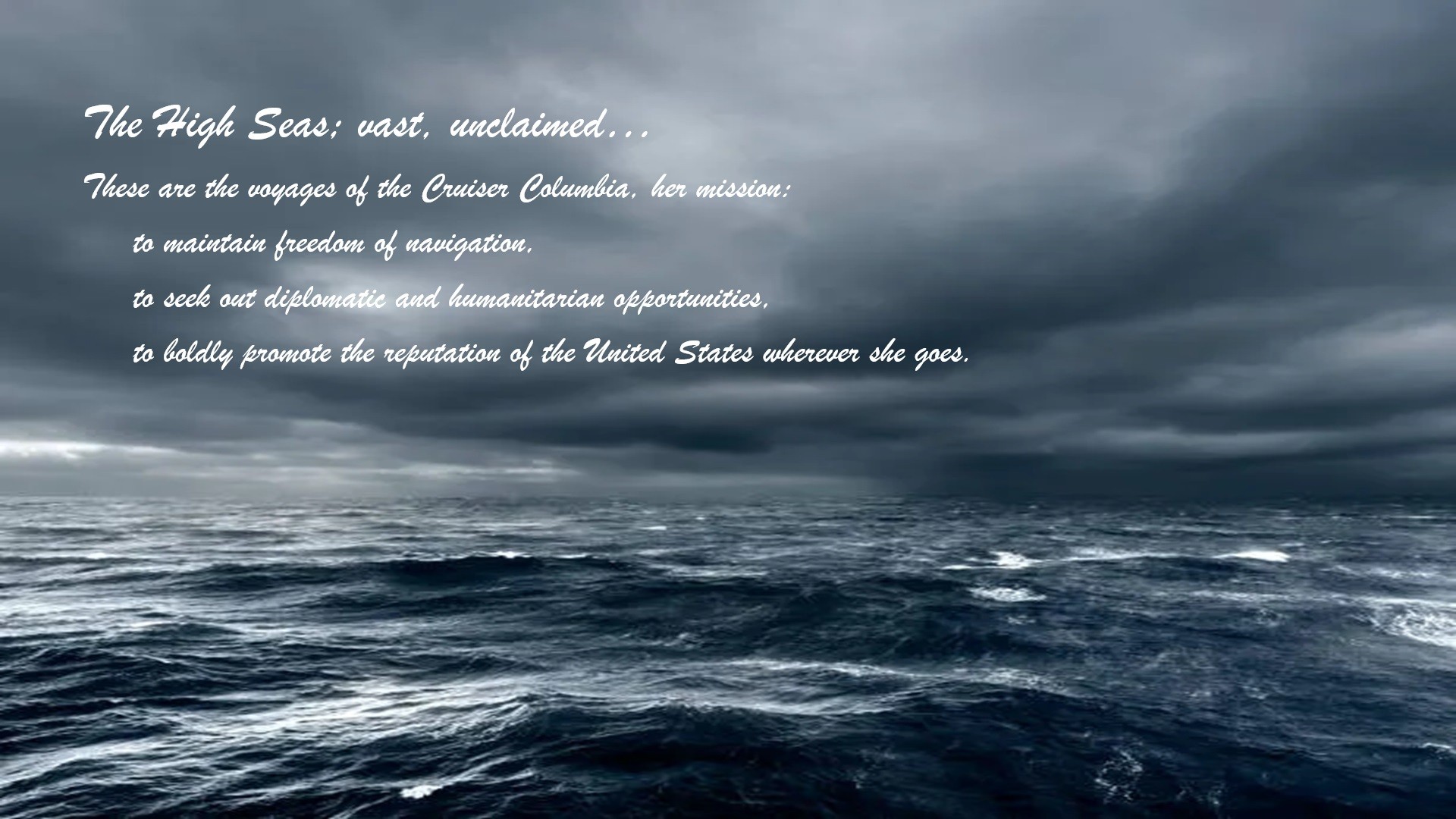
This story is intended to be the ultimate prequel to Star Trek, the original series. It is not canon – I don’t have Paramount Pictures’ license, nor do I have a letter from Gene Roddenberry or Rick Berman or even J. J. Abrams authorizing me to lay a cornerstone from which Star Trek proceeds. My intention is to depict the very first baby-step from the United States Navy toward what - in the Star Trek universe(s) - will eventually become Starfleet. The story begins in 1995 and is mostly set in 1996, the end of the Eugenics Wars according to Spock in Star Trek: “Space Seed” (the Original Series season 1 episode 22). Rick Berman’s declaration that most of the new Trek material was not canon makes understanding Star Trek much more reasonable. The myriad wanderings so far afield from The Original Series and The Animated Series are no longer a concern. We can ignore inconsistent ideas such as a ship with wildly different technology like spore drive that somehow existed before TOS – tech so powerful that all the writers have to do is introduce a deus ex machina to save the day. To you, Mr. Berman, I say, “Thank you!”
The episode is here: https://www.renderosity.com/gallery/items/3211575/high-seas-the-eugenics-wars-part-2
In actual Earth history, eugenics was a much-discussed topic as far back as the 1870s. The idea of genetic selection among humans to produce idyllic progeny much as was already being done with horses and dogs fascinated people the world over, especially in Europe and particularly in Germany. The notion of German racial superiority via eugenic methods contributed to German ideas of expansion as early as the 1890s, motivating Kaiser Wilhelm to seize Russian territory for the benefit of the Aryan race beginning in 1914. Hitler was not the first to seek “lebensraum."
Certainly the harsh penalties lodged against Germany after the Great War were a motivating factor for World War Two, but anyone in any doubt need only read “Das Reich” and “Mien Kampf” by Adolph Hitler to realize that eugenics, a topic that remained popular through the inter-war years, was part of the foundation upon which Hitler built the Nazi philosophy that found such popularity not just in Germany but all over the world. There were significant avid Aryan-supremacist populations (much akin to white supremacist) in England, France, and the United States. Hitler’s books were published in eleven languages by 1939 when WWII began. His books were instrumental in swaying the German nation to support him and his proposed path to put Germany in its ”rightful place” as the leader among the world’s powers. Fascism and eugenics were a natural pair which perpetually amplified each other.
The policy of purifying the Aryan nation by removing Jews, Blacks, Romi, the invalid, the handicapped, and any other group that might be a burden was actively pursued throughout WWII as the allies found when they discovered the concentration camps in 1945. After the war, eugenics remained popular despite proof genocide was a tool for eugenics. Proponents believed that the German experience would serve as a cautionary guide making it safe to pursue eugenics. Ironic, given these “idealists” used heritage to identify “bad people” so they could be targeted.
I have no documentation of this, but I suspect Gene Roddenberry may have seen the pattern of escalating racial wars from 1870 with the Prussians, the 1905 war between Russia and Japan, the Great War where Germany sought prominence, the Japanese driven Greater East Asia Co-Prosperity Sphere, and World War Two where Hitler wanted to “purify” the world. After WWII a whole new series of wars occurred in Burma, Cambodia, China, Indonesia, Korea, Malaysia, the Philippines, and Vietnam all rooted in imperialism and political differences. This is a stretch, but I wonder if Roddenberry saw these Southeast Asian wars from 1946 through 1973 and speculated that a new war, ideologically anchored in eugenics, might start there. I think he named this new conflict the Eugenics Wars rather than World War Three because he didn’t want to rub that nerve so soon after WWII.
The disturbing coincidence is that in real-life Earth history, the Third Taiwanese Straight Crisis occurred in 1995-6. A three-ship U.S. Navy mission to China led to an unfortunate confrontation which many credible parties at the time thought might very well precipitate WWIII. Star Trek’s Eugenics Wars ended then. The timing and location are astonishingly accurate for a TV show that aired 28 years earlier. Star Trek successfully prophesied a lot of things.
In this story, the first baby-step the United States Navy takes toward becoming Starfleet is toward enlightenment. I have guarded enthusiasm about enlightenment 30-odd years on because folks are prone to "adapt" legitimate ideas to their own purposes, but I believe Gene Roddenberry was sincerely trying to show what humanity could become via enlightenment and it is this belief I'm subscribing to in this story.
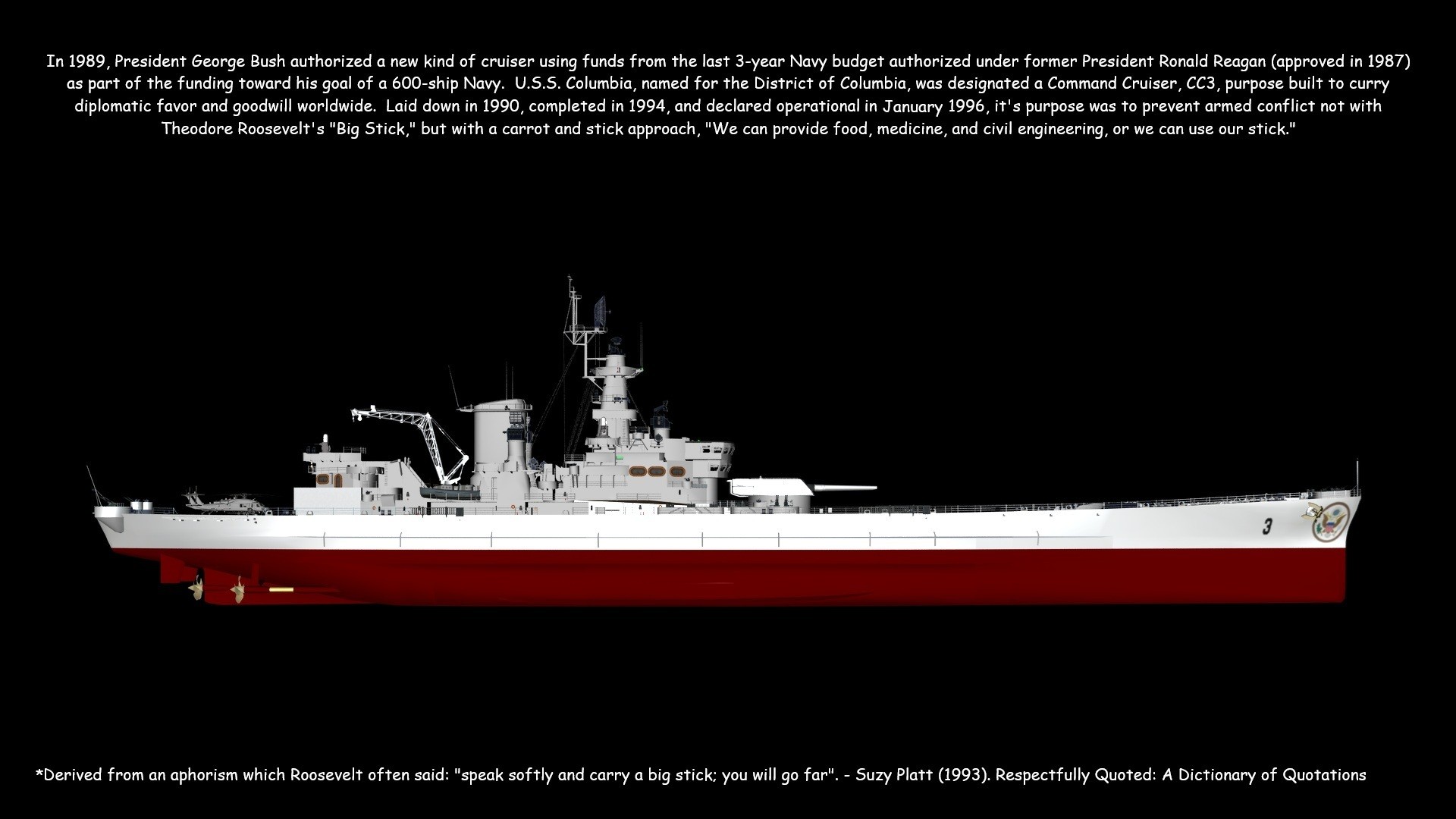
The U.S. Navy is the arm of the U.S. military that is most capable of showing up anywhere in the world with enough strength to influence any emergent event on short notice. Therefore, in this story, it is the Navy that Congress equips to act in an enlightened, idealistic way by funding construction of a capitol ship whose decks are not carpeted with weapons, instead they showcase a strong complement of helicopters and boats capable of performing humanitarian operations in extreme weather situations against extreme topography. To support this, the ship offers a large, modern medical facility, disaster relief assets, and accommodations for high level events of state.
#Star #Trek
#StarTrek
#Prequel


Comments (6)
Very nice work
Thank you! And thank you for checking in!
Very interesting!
Reminds me of a Navy Captain I once knew ... if all our leaders were as good and wise as he was this world would be so much better.
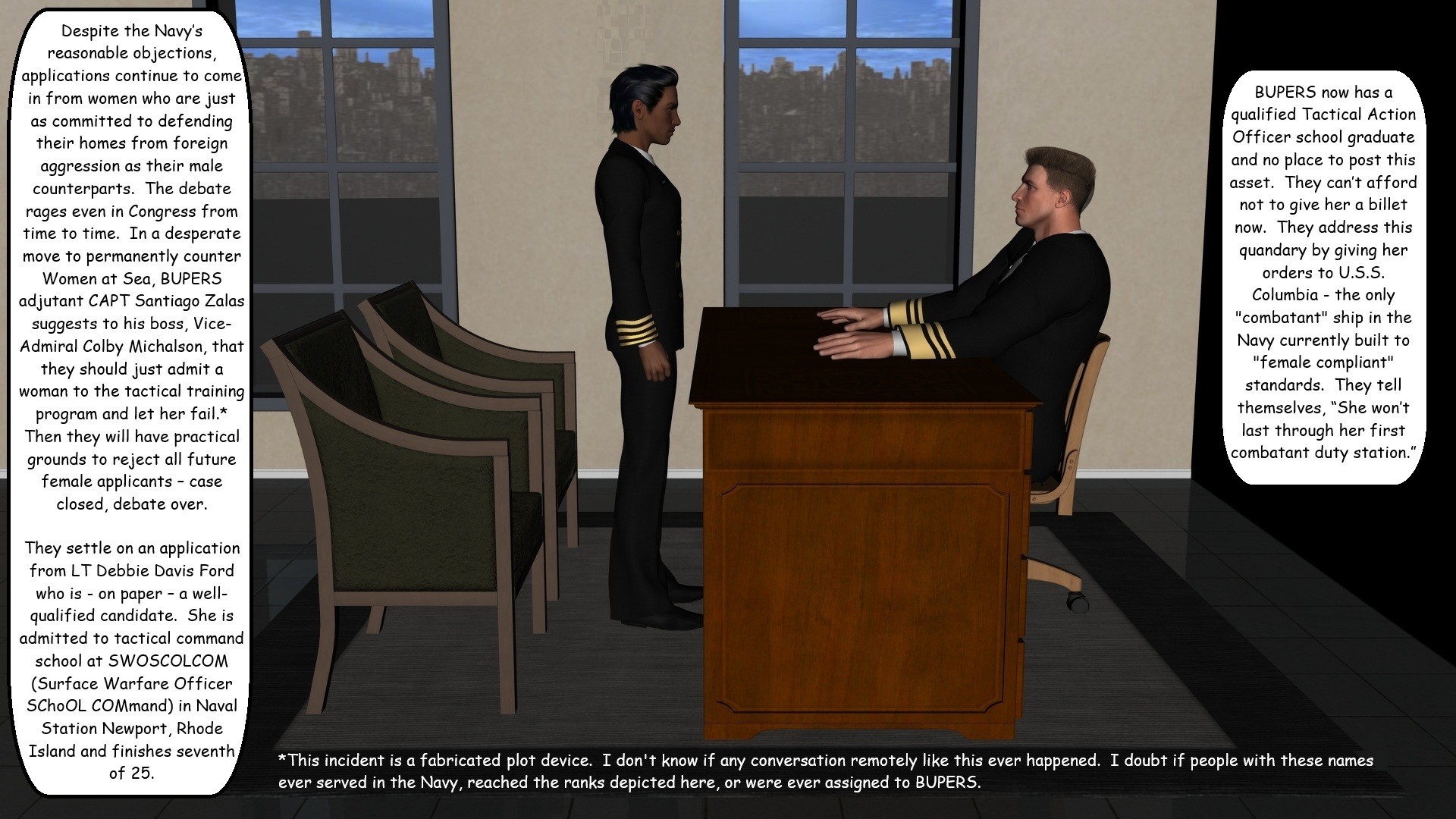
Were you referring to CAPT Zalas?
One major advantage to his proposal; no matter which way you sliced it; it forced movement on the question. Did he really care which way the resolution went? We may never know.
Absolutely brilliant, Jim! Your intro panels set the stage for the story perfectly, and the 'Star Trek' theme and timing are excellent. You've put a LOT of thought and research into this, and it shows. I'm honored to be part of it!
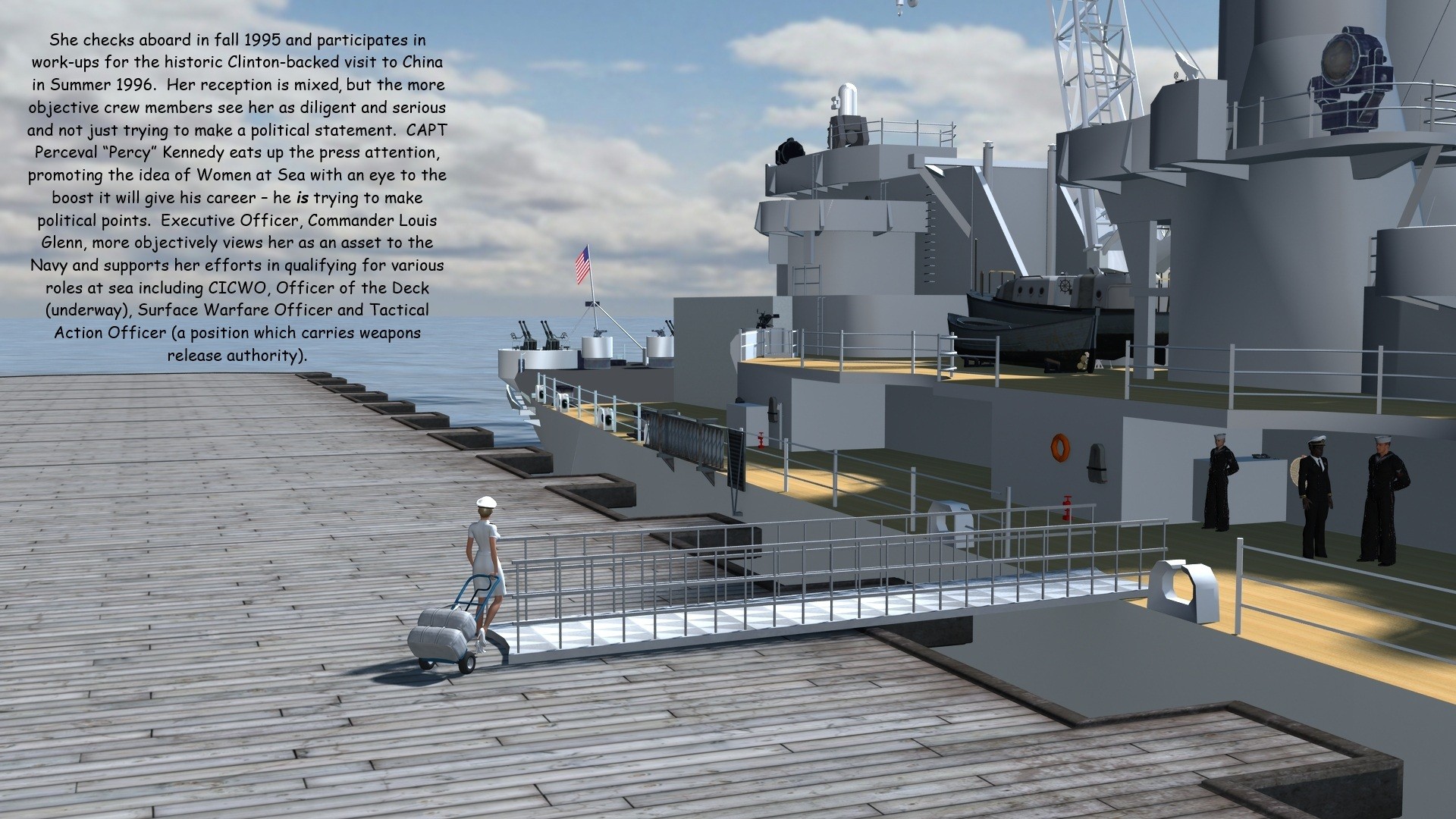
Your artwork of the ship and characters is excellent! 👍👍
I really, really appreciate you saying this, being an accomplished "Artist of the Year." I'm grateful to you for your assistance. The ship will get underway for the mission in the next posting.
Oh no, it was Gordon Messegee. If he's still alive he would be over 100 yrs old now.
This is my fault, I'm not communicating well. You said, "Reminds me of a Navy Captain I once knew." Was the "this" which put you in mind of your CAPT Messegee by any chance my fictitious CAPT Zalas?
What reminded me was just the discussion of U.S. Navy and navy ships, that's all:-)
Thank you! I am trying to ensure that I actually get the intent of readers who care enough to correspond with me! I hope my work continues to engage you!
Hey, Jim,
Sorry I've not been around much or called lately. Not been feeling great the last couple weeks or so. Getting overwhelmed with stuff. Hope to be back in action soon.
Yeah, Max is a good guy! 👍